Blog
Is ginger beer alcoholic?
Dry Shelf Editorial · Updated · 6 min read
Quick answer
No, most ginger beer sold in US stores is a non-alcoholic soft drink. Brewed ginger beers are fermented and can carry a trace of alcohol under 0.5% ABV, while alcoholic ginger beer is a separate product with a beer-style ABV on the label. If you need zero, buy cans labeled alcohol free or 0.0%.
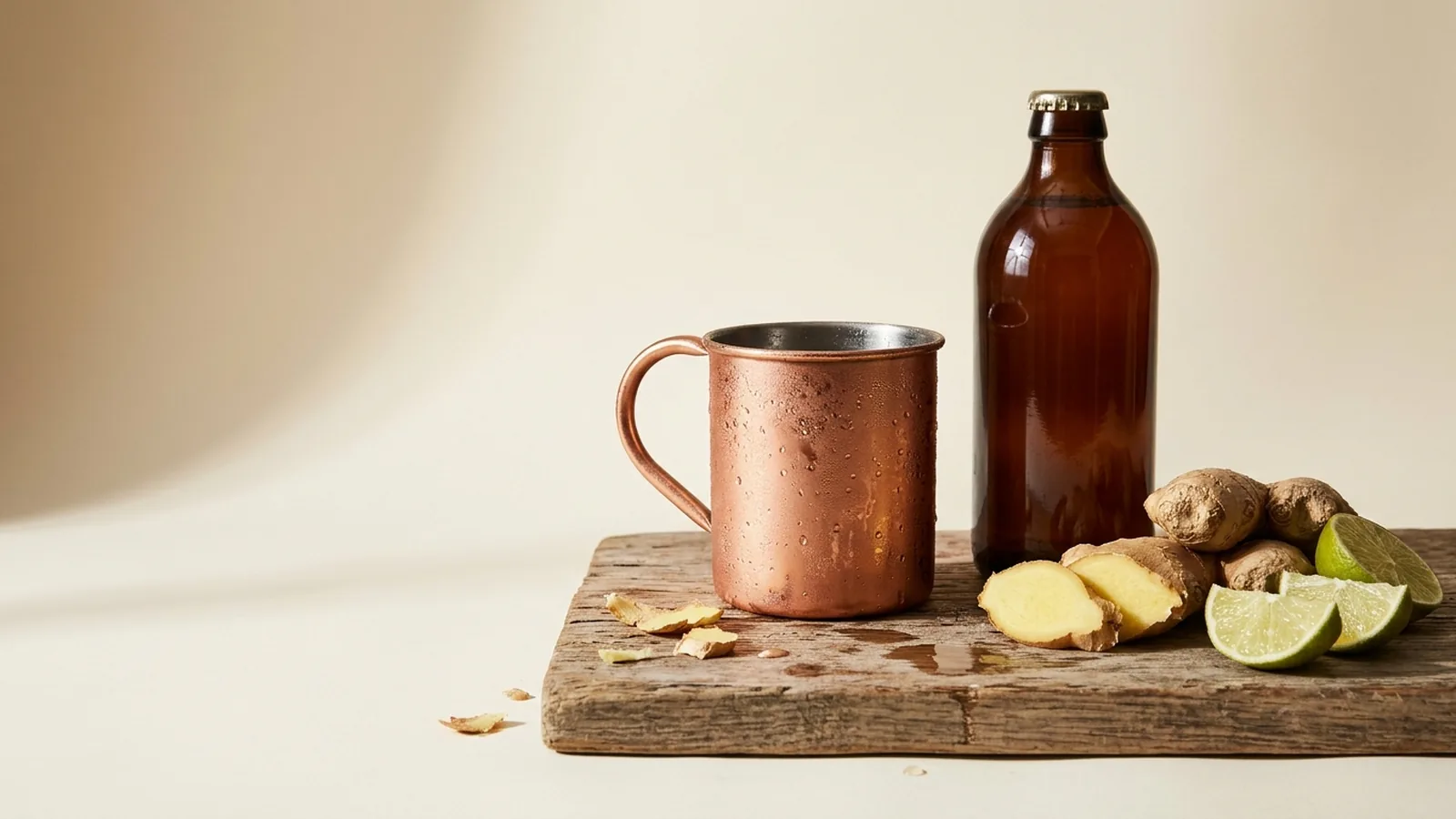
Key takeaways
- Soda-style ginger beer in the mixer aisle is a non-alcoholic soft drink.
- Brewed ginger beer is fermented, then stopped; Bundaberg says its brews keep residual alcohol below 0.5%.
- Alcoholic or hard ginger beer is a different product with an ABV and a government health warning on the label.
- In the US, non-alcoholic means under 0.5% ABV, while alcohol free and 0.0% mean none.
- Raw, live or homemade ginger beer can keep fermenting, so its alcohol is unknown.
We research rather than taste-test: label data comes from brand pages checked . How we research
On this page7 sections
No. Most ginger beer sold in US supermarkets is a non-alcoholic soft drink, and the cans in the mixer aisle are sodas, not beer. Two things complicate that answer. First, "alcoholic ginger beer" is a separate product that sits in the beer and cider cooler with an ABV on the label like any beer. Second, some ginger beers are genuinely brewed with yeast, and anything fermented can carry a trace of alcohol. For most people that trace is irrelevant. If you need zero, the label wording tells you which kind you are holding.
The short answer, by type
Ginger beer is a name, not a recipe. Here is what each kind usually means for alcohol:
| Kind of ginger beer | How it is made | Alcohol you can expect |
|---|---|---|
| Soda-style ginger beer (mixer aisle) | Carbonated water, sugar, ginger and flavorings | None added; check for "brewed" or "fermented" on the label |
| Brewed ginger beer | Fermented with yeast, then the fermentation is stopped | Trace amounts, kept under 0.5% ABV |
| Alcoholic or "hard" ginger beer | Fermented to make alcohol on purpose | An ABV like beer or cider, printed on the label |
| Homemade, from a ginger bug | Wild yeast and bacteria fermenting sugared ginger | Unmeasured; rises the longer it ferments |
| Ginger ale | A sweeter, milder ginger soda | None added |
Bottom line: A ginger beer next to the tonic water is almost always a soft drink. A ginger beer next to the beer, with an ABV and a government health warning, is not.
Why it is called "beer": a fermented history
Ginger beer was originally exactly what the name says: a brewed drink. Sugar, water and ginger were fermented with a starter culture, often at home, and the yeast produced both the fizz and some alcohol.
That starter became famous enough to get scientific attention. In 1891 the botanist Harry Marshall Ward presented a paper to the Royal Society on what home brewers called the "ginger-beer plant". The Royal Society's archive record describes his finding: jelly-like masses found in home-made ginger-beer fermentations that turned out to be a symbiotic partnership of a yeast and a bacterium, which he compared to a lichen. Today's "ginger bug" starters work on the same principle.
The modern soft drink is a different animal. Most mass-market ginger beers get their bubbles from added carbon dioxide rather than yeast, so there is no fermentation to produce alcohol. The name stayed anyway. Beer names outliving their alcohol is an old American habit; see our near beer history.
Note: "Ginger beer" and "ginger ale" are both soft drinks today. Ginger beer is usually spicier and less sweet-tasting, which is why cocktail recipes call for it.
Brewed ginger beer and trace alcohol
Some brands still ferment. Bundaberg, the Australian brewer, is the best-known example in US stores, and its own FAQ explains the process: a batch takes up to seven days to brew, then the brew is heated to above 70°C to kill the yeast and halt fermentation, which also drives off alcohol. Bundaberg states that its naturally brewed drinks contain minute residual traces of alcohol, below 0.5%.
That is how a responsibly made brewed ginger beer works: it ferments, then a controlled step stops it. The risk sits with small-batch, raw or unpasteurized ferments, where live yeast can keep working in the bottle. An Australian government survey of fermented soft drinks, coordinated through Food Standards Australia New Zealand in 2017 and 2018, tested a category of "other" fermented drinks that included ginger beer:
| Result for "other" fermented soft drinks, incl. ginger beer | Share of samples |
|---|---|
| Under 0.5% ABV | 68.6% |
| 0.5% to under 1.15% ABV | 21.6% |
| Over 1.15% ABV | 9.8% |
Those were Australian products, mostly small fermented brands, not the mainstream US mixer cans. They show the general point: when fermentation is not stopped, alcohol can climb past what a soft-drink label implies. The survey also found that alcohol in some kombucha and water kefir rose over shelf life. Our kombucha alcohol guide covers that problem in more depth.
Watch out: "Raw", "live", "unpasteurized" or "naturally fermented" on a ginger beer means the yeast may still be active. Keep it cold, drink it fresh and treat the alcohol as unknown.
What a US label is allowed to say
US rules put the line at 0.5% ABV. Under 27 CFR 16.10, a beverage containing 0.5% alcohol or more is an alcoholic beverage and must carry the government health warning. Below that, the label wording does the work:
- "Non-alcoholic" means under 0.5% ABV. For malt beverages, TTB's rule (27 CFR 7.65) requires the phrase "contains less than 0.5 percent (or .5%) alcohol by volume" right next to it. FDA, which regulates most soft drinks, also treats products with trace alcohol under 0.5% as non-alcoholic.
- "Alcohol free" is the stronger promise. TTB allows it only on malt beverages with no alcohol at all, and FDA says the term may be used only when a product contains no detectable alcohol.
- "0.0%" on a malt beverage is only allowed when it is also labeled "alcohol free" and contains no alcohol.
Most ginger beer is not a malt beverage, so FDA policy usually applies, but the logic is the same. Here is how to tell from the can:
| What the label shows | What it tells you |
|---|---|
| An ABV such as "4% alc/vol" and a government warning | Alcoholic ginger beer; not a soft drink |
| "Alcohol free" or "0.0%" | No alcohol |
| "Non-alcoholic" or "less than 0.5% alc/vol" | Up to a trace under 0.5% |
| "Brewed", "fermented", "yeast" in the ingredients | Fermented; expect a trace unless it says alcohol free |
| "Raw", "live" or "unpasteurized" | Still fermenting; alcohol can change in the bottle |
| No alcohol wording, soda-style ingredients | A soft drink with no fermentation step listed |
Tip: Paste any wording into our label decoder for a plain answer, or read the full guide to non-alcoholic labels.
How much is a trace, really?
A US standard drink holds about 14 grams of pure alcohol, according to the National Institute on Alcohol Abuse and Alcoholism. A 12 oz can at the 0.5% ceiling holds about 1.8 ml of ethanol, or roughly 1.4 grams. That is about a tenth of a standard drink, and it is the legal maximum, not the typical content. Bundaberg's own process note puts its brews below that ceiling.
For most adults, that is the end of it. Our explainer on whether 0.5% is really alcohol-free compares it with the ethanol found naturally in juice and bread.
When to check before you pour
If you avoid alcohol completely, a ginger beer deserves a ten-second label check in these cases:
- You are pregnant or trying to conceive. The CDC says there is no known safe amount of alcohol during pregnancy. Choose ginger beers labeled alcohol free or 0.0% and not live-fermented, and ask your clinician. Our pregnancy guide sets out that rule.
- You are in recovery. A brewed ginger beer is not a beer substitute, but if your rule is zero, buy soda-style or alcohol-free cans.
- Faith or personal rules. Bundaberg notes that many of its drinks hold halal certification in some markets; the certification is the brand's claim, so check it on the bottle you buy.
- You are driving. Soda-style ginger beer is a good designated driver order. Just make sure the bartender did not reach for the alcoholic one.
- It is homemade or raw. No label, no measurement. Treat it as you would homemade kombucha.
- It is on a bar menu. "Ginger beer" in a drink list can mean either. Ask which brand.
Ginger beer in alcohol-free drinks
Soda-style ginger beer is one of the best mixers for zero-proof drinks, because its spice stands in for some of the bite alcohol would add. The obvious use is a non-alcoholic Moscow mule: lime, ginger beer and a copper mug. For a dark-and-stormy style drink, top a measure of an NA rum alternative from our spirits guide with ginger beer and lime. Browse more in our mocktail recipes.
Bottom line: Most US ginger beer is a non-alcoholic soda. Brewed ginger beer can carry a trace under 0.5%, and "alcoholic ginger beer" is beer-strength. If you need zero, buy the words "alcohol free" or "0.0%" and skip anything raw or live.
Questions
Is ginger beer alcoholic?
Most ginger beer sold in US supermarkets is a non-alcoholic soft drink. Brewed ginger beers can hold a trace under 0.5% ABV, and alcoholic ginger beer is a separate, beer-strength product with its ABV on the label.
Why is it called ginger beer if it has no alcohol?
Ginger beer began as a brewed drink, fermented from ginger, sugar and water with a starter culture. Most modern versions are carbonated sodas, but the old name stuck.
Can kids drink ginger beer?
Soda-style ginger beer is a soft drink. Check the label for an ABV or government health warning, which marks alcoholic ginger beer, and for words like brewed, raw or live if you want to avoid any trace of alcohol.
Is ginger beer the same as ginger ale?
No. Both are usually non-alcoholic ginger sodas today, but ginger beer is typically spicier and less sweet-tasting, which is why cocktail recipes such as the Moscow mule call for it.
Can I drink ginger beer while pregnant?
The CDC says there is no known safe amount of alcohol during pregnancy. If you choose ginger beer, pick one labeled alcohol free or 0.0% and not live-fermented, and ask your clinician.
Keep going
Tool
0.0 or 0.5? Label decoder →
From the blog
Ginger beer mocktails: 5 recipes and how to pick a can
From the blog
What does zero proof mean?
Read next
Is 0.5% ABV really alcohol-free?
Read next
How much alcohol is in kombucha?
Read next
How to read a non-alcoholic label
Read next
Near beer: from Prohibition to the NA boom
Gear · Make your own fizz
The best sparkling water makers for mocktails
Recipe
Non-Alcoholic Moscow Mule
Sources
- 1.eCFR via Cornell LII — 27 CFR 7.65, alcohol content terms for malt beverages (non-alcoholic, alcohol free, 0.0%)(checked November 15, 2026)
- 2.FDA — CPG Sec. 510.400, dealcoholized wine and malt beverages labeling (non-alcoholic vs alcohol-free)(checked November 15, 2026)
- 3.eCFR via Cornell LII — 27 CFR 16.10, definition of alcoholic beverage (0.5% ABV or more)(checked November 15, 2026)
- 4.The Royal Society archive — Harry Marshall Ward, 'The ginger-beer plant, and the organisms composing it' (1891)(checked November 15, 2026)
- 5.Bundaberg Brewed Drinks — FAQ on brewing time, heat treatment and residual alcohol(checked November 15, 2026)
- 6.Food Standards Australia New Zealand — Coordinated survey of alcohol content and labelling of fermented soft drinks, summary (2019)(checked November 15, 2026)
- 7.NIAAA — What is a standard drink?(checked November 15, 2026)
- 8.CDC — About alcohol use during pregnancy(checked November 15, 2026)