Learn
What are non-alcoholic spirits?
Dry Shelf Editorial · Updated · 6 min read
Quick answer
Non-alcoholic spirits are mostly water carrying distilled botanicals or flavor extracts, plus a little sugar or sweetener, thickeners and preservatives; a few are real spirits with the alcohol removed. They are built to replace gin, whiskey, tequila or aperitifs ounce for ounce in cocktails, not to be sipped neat. A 2 oz pour costs about $2.40 to $4.60, roughly what mid-shelf liquor costs.
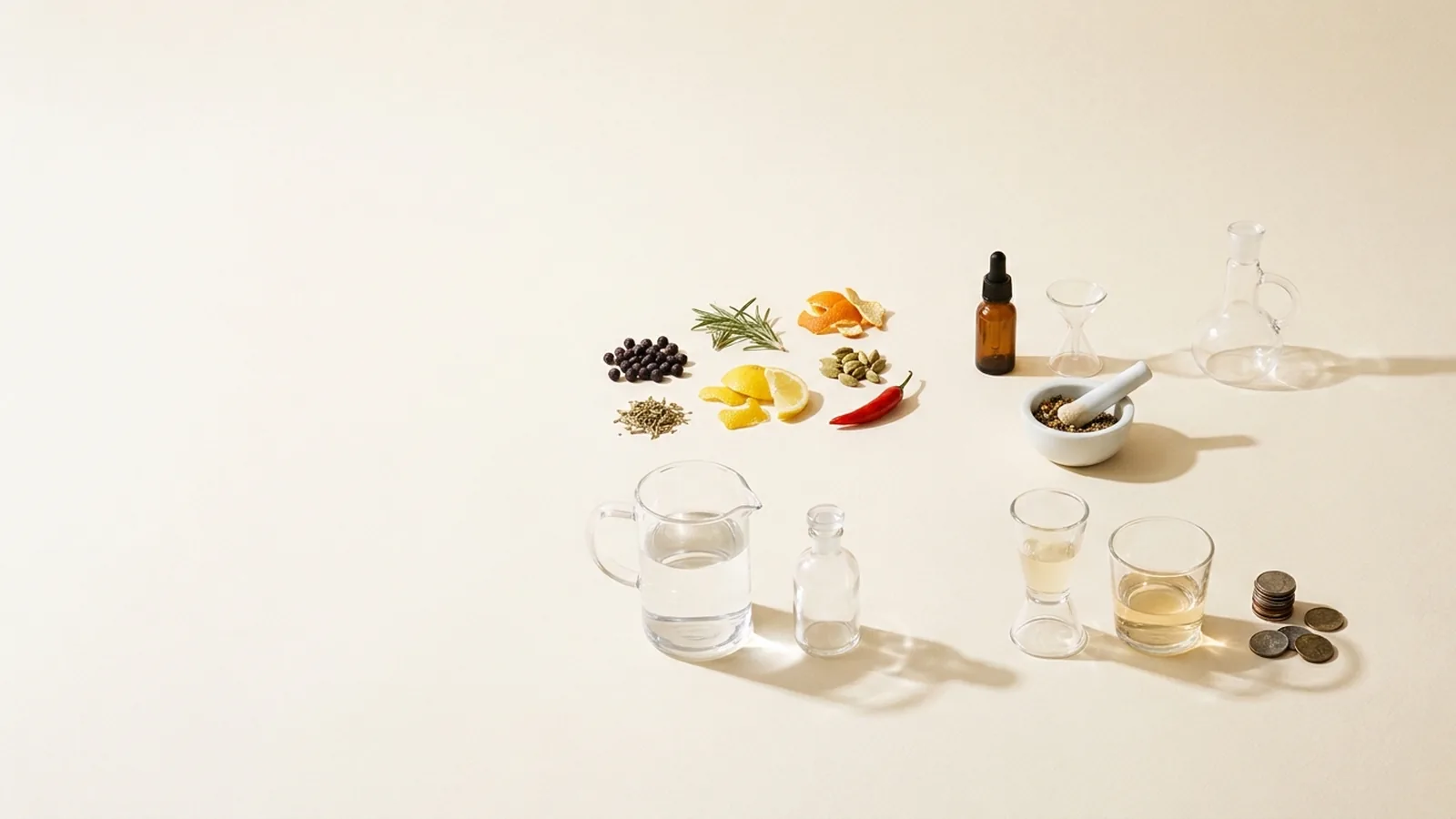
Key takeaways
- Three methods: distilled botanicals (Seedlip), alcohol removed from a real distillate (Spiritless), or flavor builds (Ritual, Lyre's, Free Spirits).
- Capsicum and other heat agents fake the burn of alcohol; gums, glycerin and sugar fake its body.
- Check the ABV line: Ghia, Wilfred's and Tanqueray 0.0 say 0.0%, most others say under 0.5% even when marketed as zero alcohol.
- Per 2 oz pour, bottles in our database run from $2.40 (Ritual) to $4.58 (Ghia), about the same as mid-shelf liquor.
- Open bottles keep weeks, not years: about 3 weeks for Ghia, about 12 for Ritual and Lyre's.
We research rather than taste-test: label data comes from brand pages checked . How we research
On this page6 sections
Non-alcoholic spirits are bottled flavor bases built to stand in for gin, whiskey, tequila or bitter aperitifs in a mixed drink. Most are water carrying botanical distillates or extracts, a little sugar or another sweetener, a thickener and preservatives. A few start as real spirits and have the alcohol removed. Almost none are meant to be sipped neat, and that is the single most useful thing to know before you buy one.
How they are made
There are three broad methods, and the label usually tells you which one you are holding.
1. Distilled botanicals, no spirit base. Each botanical is steeped and distilled on its own, then the distillates are blended with water. Seedlip, the brand that started the modern category, works this way with copper-pot and vapor stills; Garden 108 and Spice 94 list water, natural flavors from those distillates, citric acid and preservatives, and claim no sugar and no calories. Almave distills cooked blue agave the way a mezcal producer would but skips the fermentation that would create alcohol.
2. Real spirit, alcohol removed. Spiritless makes Kentucky 74 by distilling a high-proof, oak-rich concentrate and then running it through a second "reverse distillation" that strips the ethanol and keeps oils and tannins. That is why reviewers find it drier and more tannic than its rivals.
3. Flavor builds. Most bottles on grocery shelves, including Ritual, Free Spirits and Lyre's, combine natural flavors and extracts with water, sugar or a sweetener, and gums. Free Spirits describes mapping a spirit's flavor "fingerprint" and rebuilding it from distilled natural ingredients.
Note: "Distilled" on a label tells you how the flavor was extracted, not that the drink ever contained alcohol in the bottle.
Why they taste hot: capsicum and friends
Alcohol does not just taste of something; it burns. To fake that burn, several brands add heat. Ritual uses capsicum (chili pepper) across its range, and reviewers at The Healthy and The Takeout point to it as the source of the kick in Ritual's gin and agave alternative. Sporked and Garden & Gun both describe a capsaicin-like finish in Free Spirits' Spirit of Bourbon. Ginger, black pepper and cascarilla bark do similar work in other bottles.
The heat helps a margarita taste like a margarita. Sipped straight, it can feel like pepper water.
Why they lack body
Ethanol makes a spirit feel heavier and oilier in the mouth, carries aroma up to the nose and slows down how fast you drink. Take it out and you are left with a water-based liquid, which is why reviewers across the board call these products thin. Whisky Advocate described every NA whiskey it tried as thin-bodied, with unusual aromas.
Brands push back with three tools:
- Gums and thickeners: xanthan gum (Ritual, Monday), locust bean gum (Monday), cellulose gum (Lyre's), acacia or pectin (Ghia, Little Saints).
- Glycerin: Free Spirits and Spiritless add glycerine for weight and a little sweetness.
- Sugar: even a gram or two per pour adds roundness. Lyre's Italian Orange carries 5.4 g of sugar per ounce, which helps it feel like a liqueur.
The label check
Read three lines before you buy.
| Check | What to look for | Examples from our database |
|---|---|---|
| ABV wording | 0.0% vs "less than 0.5%" | Ghia, Wilfred's and Tanqueray 0.0 say 0.0%; Ritual, Monday, Free Spirits and Spiritless say under 0.5%; Lyre's states under 0.2–0.4% |
| Sweetener | Sugar, glycerin, stevia, monk fruit or sucralose | Monday gin uses monk fruit; Lyre's Bourbon Alternative adds stevia; Tanqueray 0.0 uses sucralose and acesulfame K |
| Shelf life once open | Weeks, not years | Ghia about 3 weeks; Ritual and Lyre's about 12 weeks; Free Spirits about 3 months |
Brands that sell at under 0.5% sometimes market themselves as "zero alcohol" anyway. Under US rules "alcohol-free" should mean 0.0, so trust the number, not the slogan. Our label decoder explains the wording, and Is 0.5% ABV really alcohol-free? covers who should stick to 0.0.
Watch out: Without alcohol as a preservative, an open bottle can go flat or spoil. Write the opening date on the label and keep it in the fridge.
What a pour actually costs
A US cocktail usually takes about 2 fl oz of base spirit, so we price everything per 2 oz (60 ml) pour: bottle price divided by bottle size in milliliters over 60. Using the current list prices in our records:
| Bottle | Price | Size | Per 2 oz pour |
|---|---|---|---|
| Ritual Zero Proof (any spirit) | $29.95 | 750 ml | $2.40 |
| Almave Blanco | $29.99 | 700 ml | $2.56 |
| Seedlip Garden 108 or Spice 94 | $31.99 | 700 ml | $2.73 |
| Free Spirits Spirit of Bourbon | $34.98 | 750 ml | $2.80 |
| Spiritless Kentucky 74 | $35.99 | 700 ml | $3.08 |
| Monday Zero Alcohol Gin | $40.00 | 750 ml | $3.20 |
| Lyre's (Italian Orange, Bourbon Alternative) | $37.99 | 700 ml | $3.25 |
| Little Saints St. Oak | $49.99 | 750 ml | $4.00 |
| Ghia Original Apéritif | $38.00 | 500 ml | $4.58 |
Two things stand out. First, these bottles cost about the same per pour as mid-shelf liquor: a $30, 750 ml bottle of whiskey is also $2.40 a pour, so you are not saving money on the spirit itself. Second, aperitifs look expensive per 2 oz but are designed to be used at 1 to 1.5 oz and topped with soda; Ghia's own serving works out to about $2.24. Run your own numbers, including mixers, in the price per serving tool.
How to use them well
Tip: Treat an NA spirit as a cocktail ingredient, not a drink.
- Mix long or mix sour. Highballs (tonic, ginger beer, soda) and sours (citrus plus syrup) hide the thin texture best. Reviewers consistently prefer every bottle here mixed rather than neat.
- Swap 1:1, then adjust. Most brands are built to replace their alcoholic counterpart ounce for ounce. If a drink tastes watery, cut the dilution: shake for less time or use one big ice cube.
- Stack two NA bottles. A Negroni made with an NA gin, NA bitter aperitif and NA vermouth tastes far more complete than one NA spirit with juice.
- Use salt, bitters and acid. A pinch of salt in a margarita or a dash of NA bitters adds the structure alcohol usually supplies.
- Match the job. For a margarita, Ritual's agave alternative brings heat. For an Old Fashioned, Kentucky 74. For a G&T, Monday. For a spritz with no alcohol at all, Ghia.
Bottom line: Buy an NA spirit for the cocktail you already make most often, read the ABV and sweetener lines, and finish the bottle within its weeks-long shelf life.
Browse every bottle we track in the spirits hub, or let the swap finder match one to what you usually drink.
Questions
Do non-alcoholic spirits contain any alcohol?
Some contain none: Ghia, Wilfred's and Tanqueray 0.0 are labelled 0.0%. Many others, including Ritual, Monday, Free Spirits and Spiritless, state less than 0.5% ABV, which is non-alcoholic under US rules but not alcohol-free.
Can you drink non-alcoholic spirits straight?
You can, but most reviewers find them thin or oddly hot neat, and many brands say they are designed for cocktails. They taste best in highballs and sours.
Why do some non-alcoholic spirits taste spicy?
Brands such as Ritual add capsicum, and others use ginger or pepper, to mimic the burn of alcohol.
How long does an opened bottle of NA spirit last?
Weeks, not years. Ghia says about 3 weeks, Ritual and Lyre's about 12 weeks, Free Spirits about 3 months. Refrigerate after opening.
Are non-alcoholic spirits cheaper than liquor?
Not per pour. Bottles in our database cost $2.40 to $4.58 per 2 oz, about the same as a mid-shelf spirit.
Keep going
Tool
Price per serving →
Tool
0.0 or 0.5? Label decoder →
Tool
Swap finder →
Read next
Non-alcoholic gin alternatives: juniper, botanicals and the G&T
Read next
Is 0.5% ABV really alcohol-free?
Read next
How to read a non-alcoholic label
From the blog
How to make a mocktail
From the blog
What does zero proof mean?
Gear · Stirred drinks
The best mixing glasses for stirred non-alcoholic drinks
Gear · Measure the pour
The best cocktail jiggers for mocktails
Gear · Muddled drinks
The best muddlers for mocktails
Sources
- 1.Whisky Advocate — Can zero-proof whiskey stand in for your daily dram?
- 2.Spiritless — FAQs (reverse distillation, ABV, gluten)
- 3.Ritual Zero Proof — FAQ (ABV, calories, shelf life)
- 4.Almave — Blanco product page and FAQ (no fermentation)
- 5.Free Spirits — The Spirit of Bourbon (method and nutrition)
- 6.The Healthy — alcohol-free spirits tested